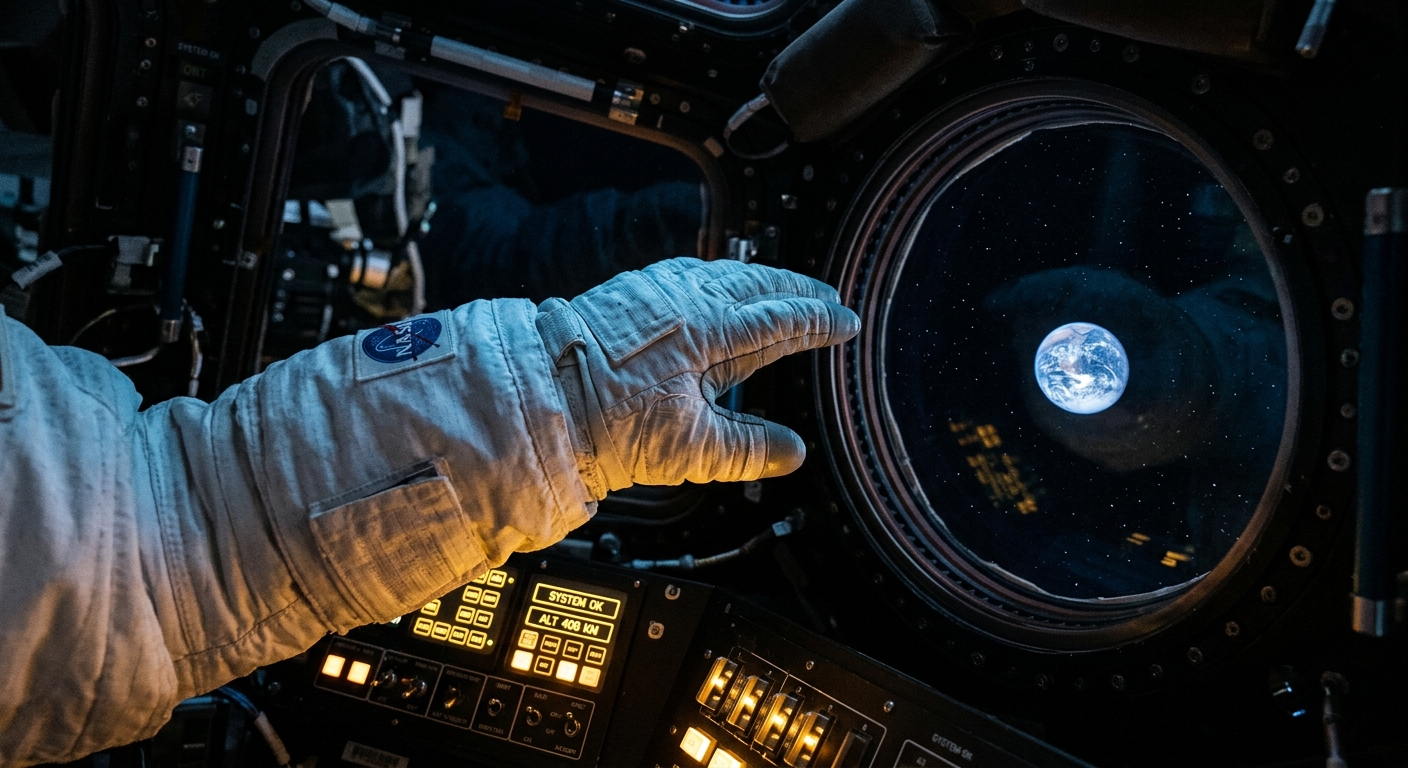
Why We Still Need Heroes in Spacesuits: What a Real Astronaut and a Fictional Teacher Tell Us About Humanity at the Frontier
A character-driven piece profiling Artemis II commander Reid Wiseman alongside Project Hail Mary's protagonist Ryland
informative · 9 min read · April 2026
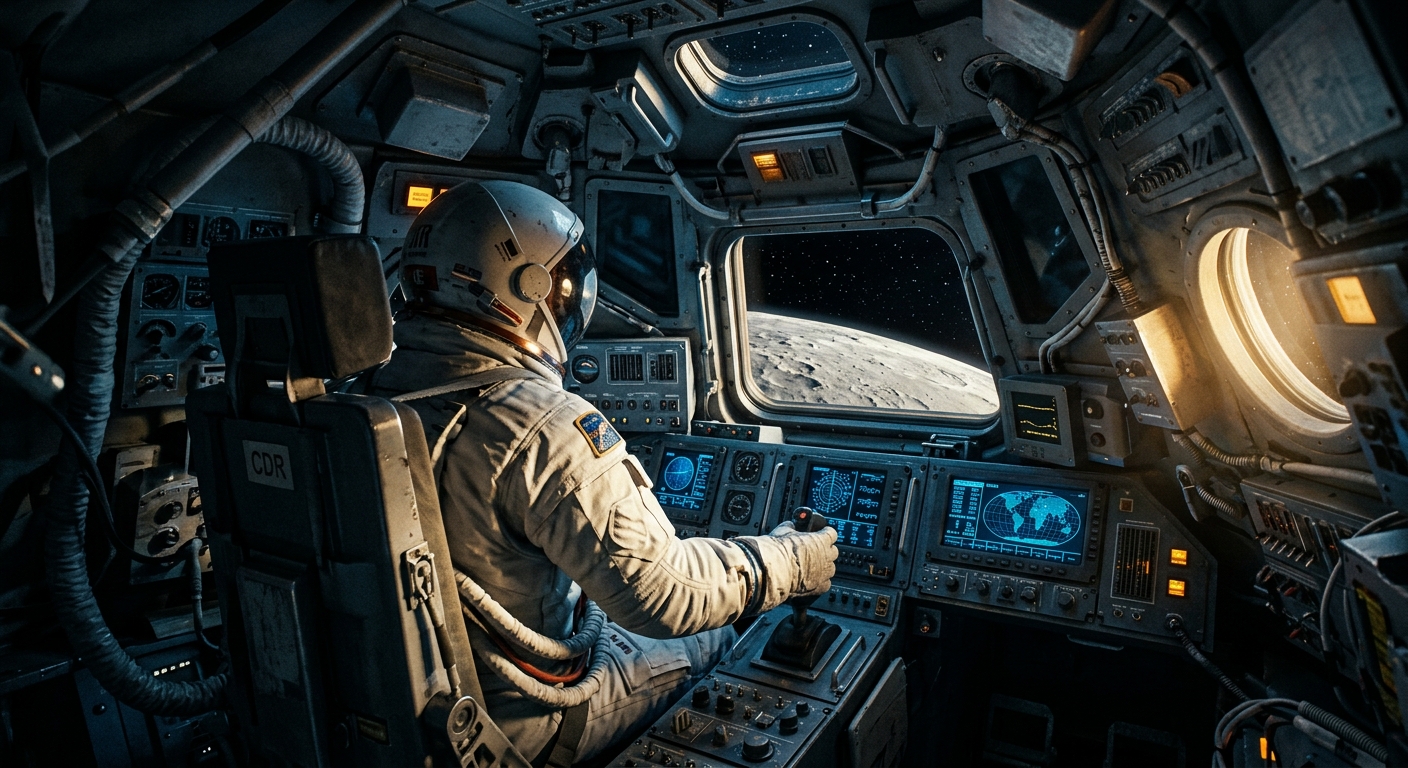
Before we talk about systems and stakes, it helps to picture two men in two very different kinds of confinement.
Soon, NASA astronaut Reid Wiseman will climb into Orion, the capsule for Artemis II, and spend about 10 days looping out toward the Moon and back—the first crewed lunar-vicinity mission since Apollo. Orion's habitable space is often described as roughly the size of a large van, an enclosure so intimate that eating, sleeping, and simply existing become communal acts. In Andy Weir's 2021 novel Project Hail Mary, Ryland Grace opens his eyes in a much lonelier metal box, light-years from home, surrounded by the bodies of his dead crewmates and unable at first to remember his own mission. One commander is real, one invented; both are sealed inside machines carrying more than just passengers. They are carrying consequence.
This parallel raises a stubborn question. In an age of autonomous navigation, AI-assisted decision-making, and robotic probes that can cross the solar system without complaint, why does our attention keep snapping back to the person inside the spacecraft? Why, when the hardware is so sophisticated, do both NASA's most symbolically important mission in decades and one of the decade's most beloved space novels hinge on a single human being's judgment?
This is not a story about rockets, nor is it a recap of Weir's plot. It is a story about character—about what we ask of a person when the margin for error disappears, and what we hope remains when training, memory, and even companionship fall away. Artemis II arrives as a test flight of new hardware and old ambition. Project Hail Mary became a cultural phenomenon for a related reason: not because space is vast, but because a human being inside that vastness still matters.
This sense of consequence is precisely what makes NASA's choice of commander so critical. Artemis II is not a routine crew rotation or a prestige posting. It is, as the National Air and Space Museum notes, a hybrid of Apollo 7's systems check and Apollo 8's lunar reach: a shakedown of new human-rated hardware and, simultaneously, a real voyage around the Moon. For about 10 days, the crew will live inside Orion, launching beyond Earth orbit for the first time in more than half a century, sweeping around the Moon, and coming home. No landing. No margin for romance. The point is to prove that the systems work with people aboard.
Which means the people aboard are part operator, part instrument.
That is the weight on Reid Wiseman. As commander, he is being asked to lead not just a mission but an experiment in which he and his crewmates are the test subjects. Orion and the Space Launch System are there to be evaluated under real conditions; so are the humans inside them. How do four elite astronauts eat, sleep, work, and stay psychologically steady in close confinement when every system is being watched, every procedure is new in context, and Earth is receding farther than any living person has ever traveled?
The old movie version of command—jaw set, orders barked—doesn't quite fit here. Wiseman's job is subtler. In a capsule this small, over a timeline this long, authority is less about dominance than about emotional temperature. He has to make uncertainty feel manageable. He has to keep the crew coherent when the mission itself is designed to surface unknowns.
And the crew around him is not one that needs micromanaging. Victor Glover, Christina Koch, and Jeremy Hansen are each, by any ordinary standard, extraordinary. That is part of the challenge. Leading a team like this means accepting that everyone in the room is highly competent and accustomed to responsibility. The commander's value is not that he is the smartest person on board. It is that he may need to be the steadiest: the one who can absorb stress without amplifying it, make decisions without theater, and create trust in a place where trust is as life-supporting as oxygen.
That, more than swagger, is what "going first" demands.
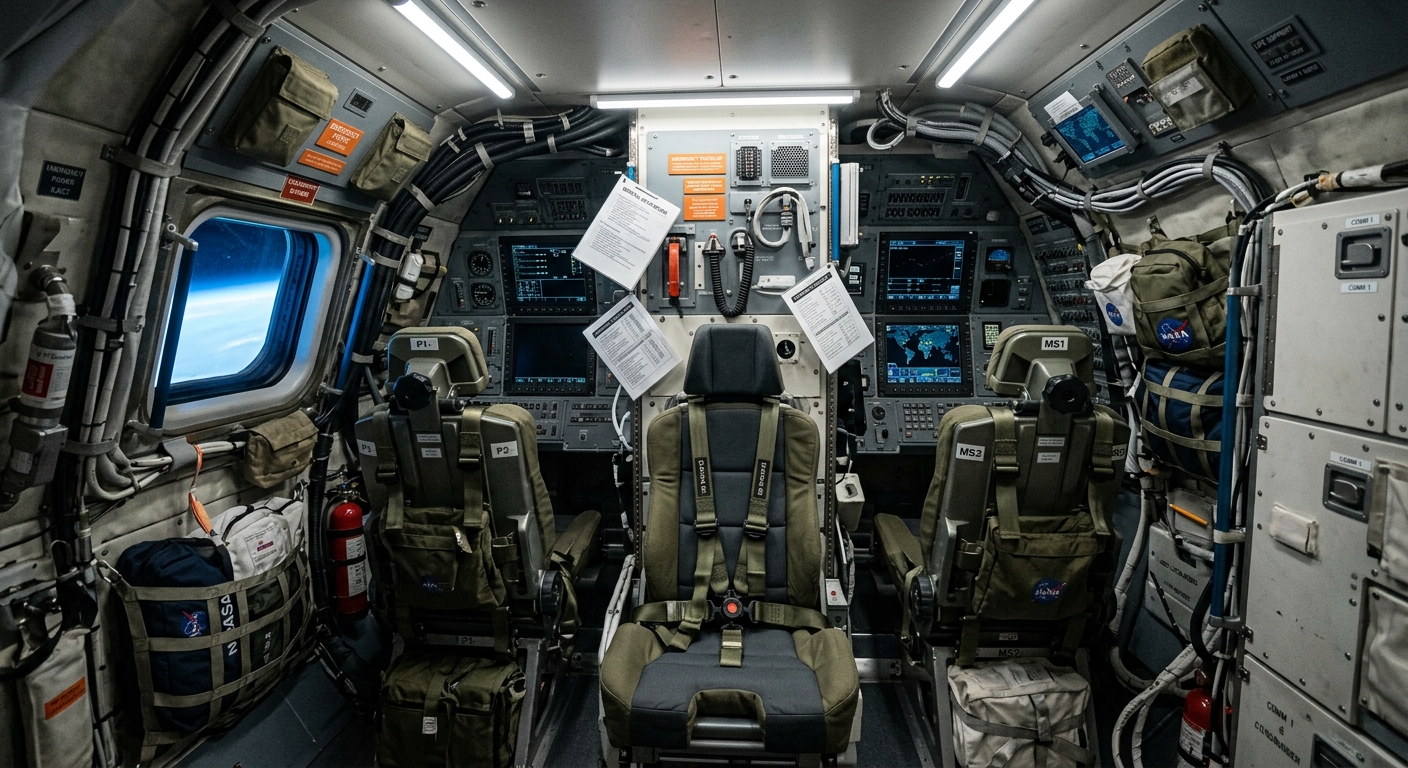
While Artemis II revives the classic image of the astronaut—disciplined, decorated, strapped into a tightly choreographed mission—Andy Weir's Project Hail Mary poses a slyly different question: what if the person best equipped to save the world is the one who very much did not sign up for the job?
Ryland Grace is not a test pilot, not a military icon, not even an astronaut in the traditional sense. He is a middle-school science teacher, a man whose gifts are pedagogical and analytical rather than martial. When he wakes aboard a ship light-years from Earth, he doesn't emerge as a swaggering explorer. He comes to consciousness confused and amnesiac, trapped beside the corpses of his two crewmates. It's one of Weir's sharpest reversals of the genre's usual fantasy: the hero enters not in triumph, but in horror.
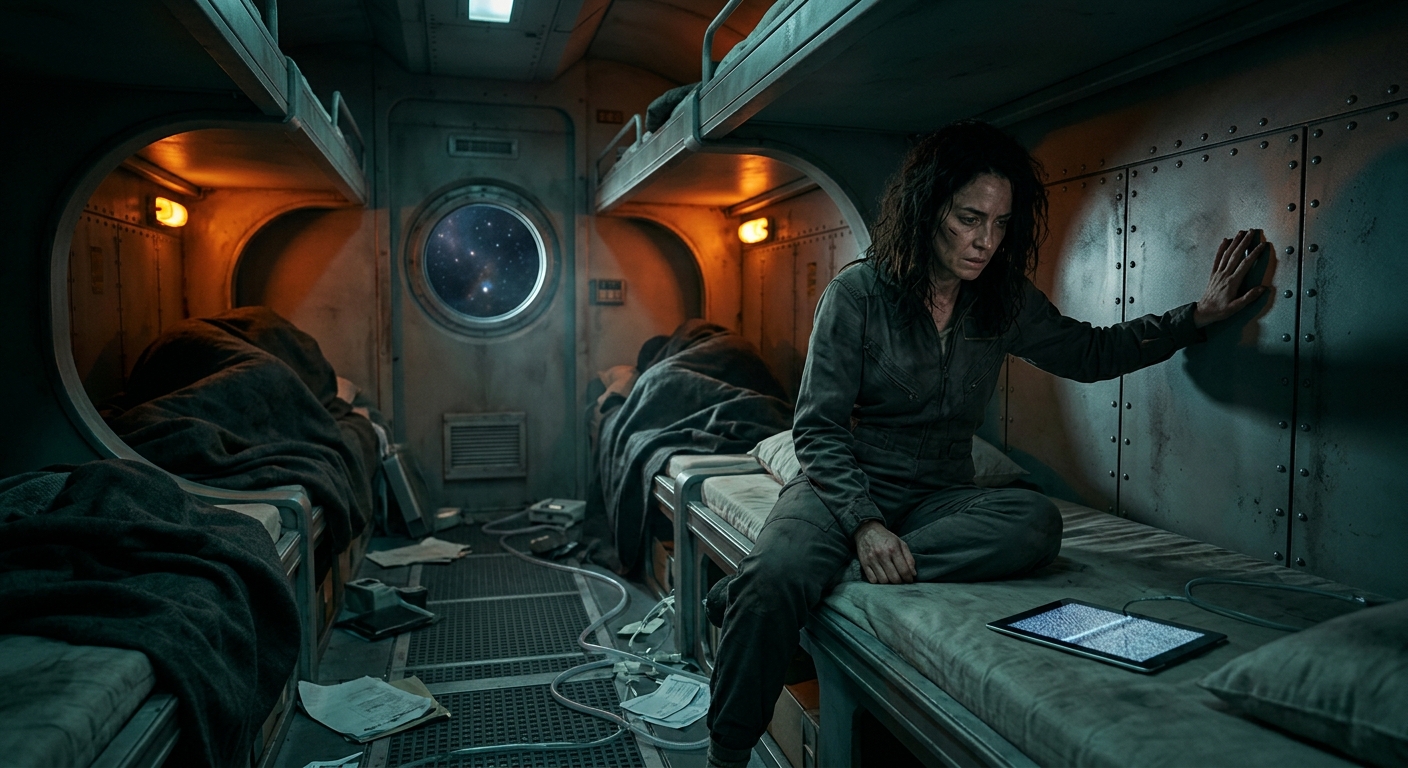
What qualifies Grace for the mission is not fearlessness but usefulness. As one review of the novel notes, Project Hail Mary is built around "science and problem solving," with the pleasure of the book coming from watching a mind work through impossible constraints step by step. Grace survives by doing what a good teacher does: breaking big problems into smaller ones, running experiments, checking assumptions, talking himself through the logic. His heroism is procedural. He measures, revises, fails, and tries again. In Weir's hands, competence becomes not a personality trait but a moral one—the decision to keep thinking clearly when panic would be easier.
This matters because Grace is also scared, lonely, and, crucially, reluctant. He was chosen for his scientific mind, not because he longed to plant a flag in the cosmos. Contemporary readers, perhaps exhausted by invulnerable protagonists, may find that reluctance more persuasive than old-fashioned derring-do. Grace feels like the kind of person many of us imagine we might be under pressure: not destiny's favorite son, just someone trying to do the math before everything falls apart.
And then Weir gives him Rocky. The novel's emotional center is not solitary endurance but friendship—an alliance built across radical biological and cultural difference. Grace's finest quality turns out not to be his intellect alone, but his willingness to trust, to listen, to care for someone who is utterly alien. In that sense, Project Hail Mary quietly redefines the space hero: not the toughest person in the room, but the one who can learn, adapt, and choose connection anyway.
Here, the comparison between the real commander and the fictional one sharpens. What links Reid Wiseman and Ryland Grace is not simply that both travel through deep space, but that both are built for a particular kind of crisis: the kind in which panic is useless, the margin for error is microscopic, and the mission matters more than the person carrying it.
For Wiseman, that pressure is real and procedural, rooted in the unforgiving realities of his test flight. Nothing about the crew's confinement is glamorous; it is a machine for exposing temperament. Grace faces the same test in a more brutal register. He wakes alone on a years-long interstellar mission, with two crewmates dead and the survival of Earth hanging on his ability to reason his way forward. As Weir's novel illustrates, the real subject is not just science but competence under impossible conditions—the pleasure and terror of watching a mind keep working when everything else has failed.
The difference, of course, is consent. Wiseman trained his entire adult life for this assignment; Grace is, essentially, drafted into it. One man has spent a career becoming the person NASA would choose. The other spends much of his story resisting the idea that he is that person at all. Yet both narratives arrive at the same unsettling conclusion: the right person is not always the most eager or the most charismatic. It is the one who can stay lucid when the variables multiply.
This also makes both stories, quietly, about trust. NASA is effectively betting a multibillion-dollar program on Wiseman's judgment and steadiness. In Weir's novel, humanity places an even wilder wager on Grace: not on his courage in the abstract, but on his adaptability, his integrity, his willingness to keep solving the next problem. In both cases, the most critical system on board is the person.
This focus on the person inside the machine feels strangely timely. For years, our space imagination has tilted toward two extremes: exquisitely capable robots sending back data from millions of miles away, and billionaire spectacle built around the launch itself. Artemis II and Project Hail Mary point somewhere else. They put the emphasis back on the fragile, thinking human being.
Andy Weir has been building toward this for a while. From The Martian to Project Hail Mary, his signature hero is not the conquering captain but the competent improviser: the person who survives by understanding systems, doing math under pressure, and fixing what breaks. His stranded-schoolteacher protagonist wakes up alone and has to reason his way forward, one problem at a time. The Artemis II mission carries a similar ethic into the real world, a flight defined not just by its destination but by the four astronauts who will take an untried vehicle on its first crewed voyage.
Of course, that raises the obvious question: why send people at all? We could loop an uncrewed craft around the Moon. Weir could have written a novel in which an AI coolly solves the Astrophage crisis. But neither story chooses that path. The choice matters. It suggests that exploration is not only about what information comes back, but about who must bear uncertainty in real time—making decisions that cannot be fully automated.
In that sense, both Artemis II and Project Hail Mary push back on a familiar cynicism about human spaceflight. They argue, quietly but insistently, that the fear, wonder, and judgment involved in going are not incidental to the mission. They are the mission.
Ultimately, the two stories hinge on the same fundamental question. When Reid Wiseman climbs into Orion for his 10-day loop around the Moon, and when Ryland Grace wakes up alone beside his dead crewmates, the narrative narrows to a single point: can this person handle what comes next?
Not in the abstract. Not as a poster or a symbol. But in the minute-by-minute sense. Can he stay useful when the plan gets thin and the margin for error gets thinner? Can he be disciplined without becoming rigid, inventive without becoming reckless? Wiseman's mission is a test flight, which means NASA is not only testing hardware; it is testing the human being inside it. Grace is tested even more brutally: memory returning in fragments, the ship depending on him, the future of Earth compressed into one frightened, funny, improvising mind.
That may be what we are really asking every time we choose who goes to space, whether in life or on the page. We are asking who we trust to be human on our behalf—to stay curious, careful, and brave in a place that is none of those things.
Artemis II is not the destination. Grace's story ends with a decision about where home truly is. Both suggest the same thing: the frontier is not a place waiting out there. It is a question about who we become when we arrive.