
Earth's Damage Report: What Humanity Has Destroyed — and Why We're Already Looking for the Exit
This angle leads with the sheer scale of documented environmental destruction — deforestation, species loss, ocean
informative · 16 min read · April 2026
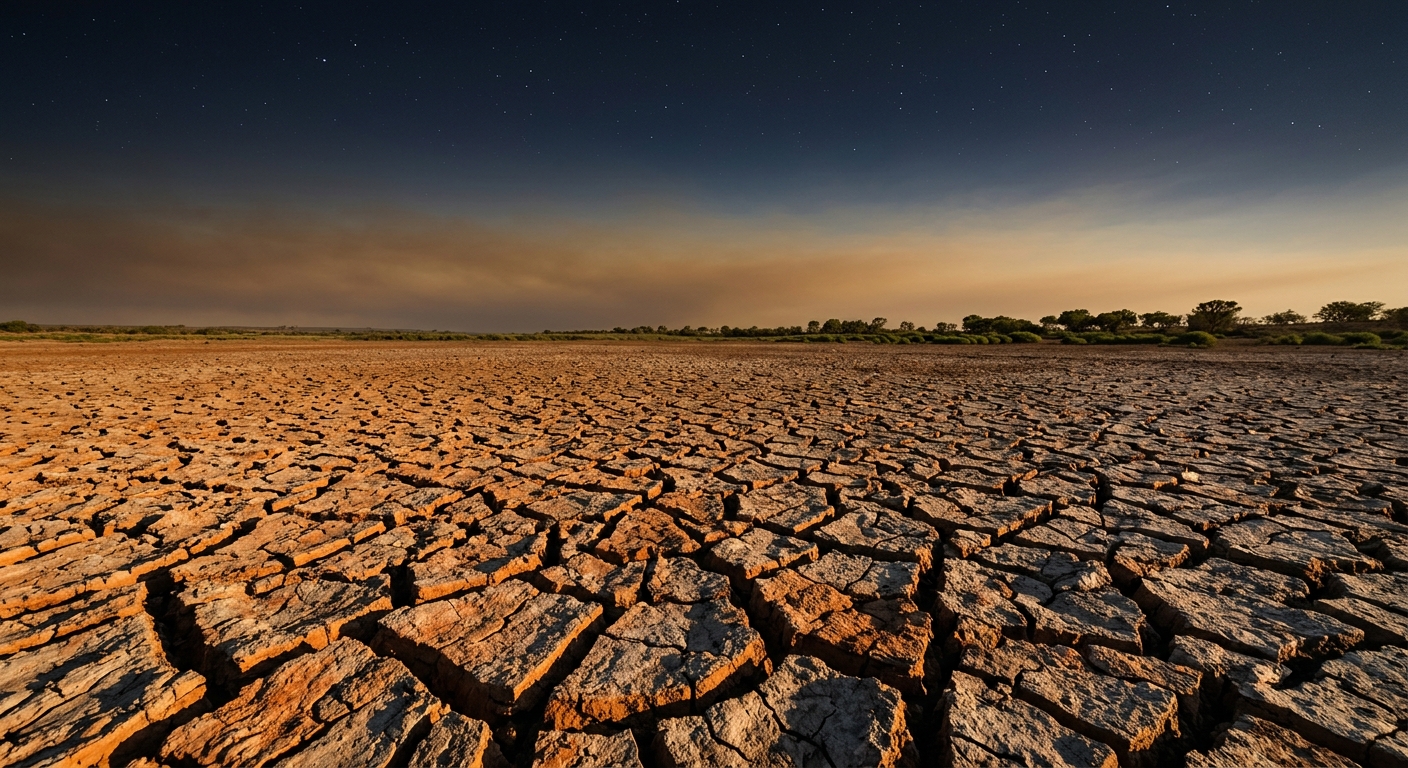
In the time it takes to read this sentence, another hectare of rainforest will vanish. Somewhere, a vast sheet of ice will groan and calve into a warming sea, its collapse as loud as a building demolition. These moments of planetary unmaking are now constant, a quiet drumbeat beneath the noise of our daily lives. At the same time, miles above the atmosphere, humanity is executing the most complex and expensive missions in its history. Robotic explorers scour the dust of Mars, and powerful telescopes search for the faint chemical signatures of life in distant solar systems.
This is the defining tension of our era: we are meticulously documenting the unraveling of Earth's life-support systems while simultaneously investing immense resources to find or build a new home. One project is an act of destruction; the other, a search for an escape. This, then, is a damage report. It is an attempt to take stock—to catalogue what has been lost, what is being lost, and what the logic of seeking an exit reveals about our priorities here on the only planet confirmed to harbor us. By soberly assessing the cost of our actions, we can begin to understand the strange, parallel momentum that propels us toward the stars.
The Atmosphere
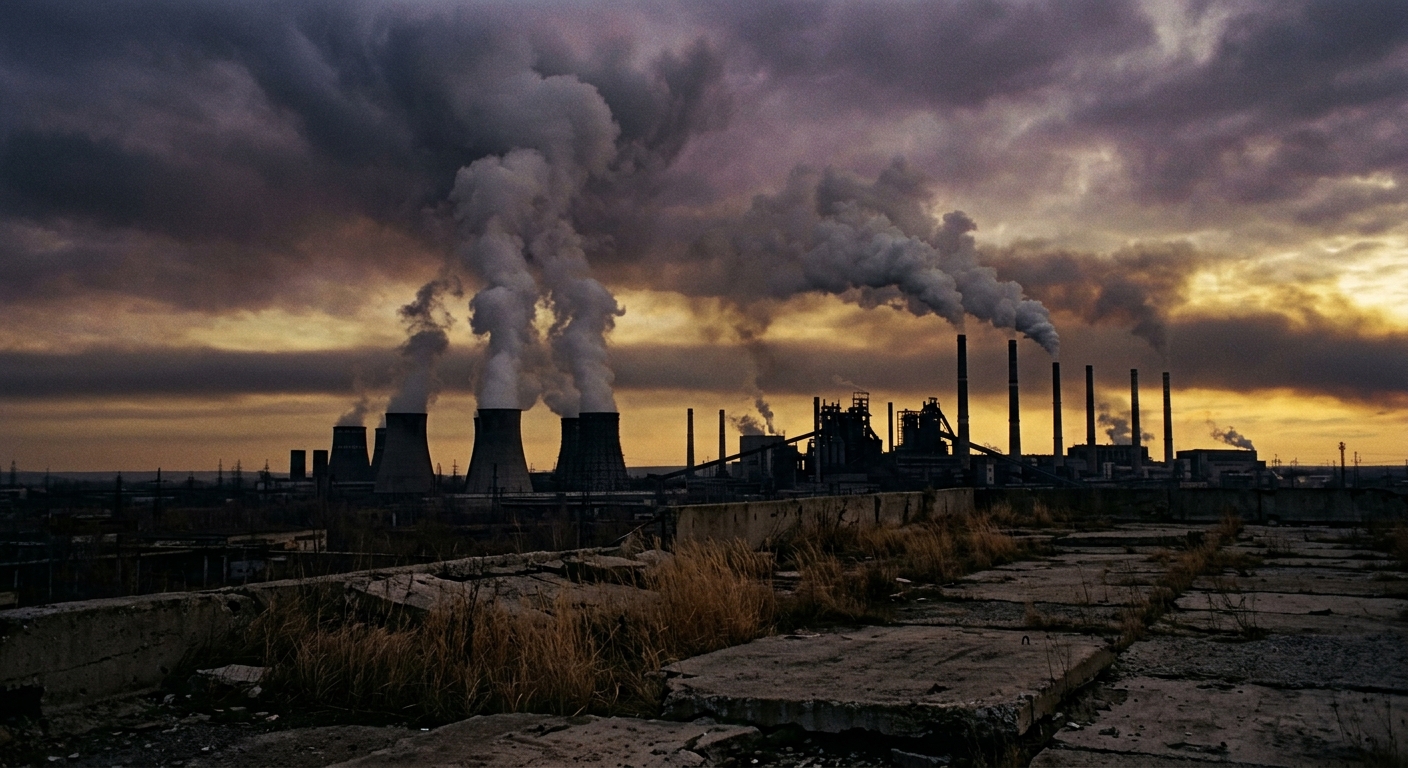
The clearest record of this unraveling is written in the air. The planet has already warmed by about 1.1°C above the 1850–1900 average in the 2011–2020 period, according to the Intergovernmental Panel on Climate Change (IPCC). That number can sound abstract until translated into lived effects. At 1.5°C, the IPCC finds, heat waves intensify, heavy rainfall becomes more severe, and risks to coral reefs, Arctic sea ice, and food systems rise sharply. At 2°C, those risks do not merely double; they compound. More people face dangerous heat, crop losses deepen, and ecosystems that survived the first increment begin to fail in larger numbers.
This warming is the result of an atmospheric loading operation carried out over generations. Human activity has emitted roughly 2,390 gigatonnes of carbon dioxide from 1850 to 2019, by the IPCC's accounting. Carbon dioxide is the largest share, but it is not acting alone. Methane from fossil fuel production, livestock, and waste; nitrous oxide from fertilizer use; and industrial fluorinated gases have all added to the blanket that traps heat. Cumulative emissions matter because carbon dioxide lingers. A large fraction remains in the climate system for centuries, meaning the damage is measured not only in this year's smokestacks or tailpipes, but in the total inheritance of all the years before.
Responsibility is not evenly distributed. The fossil fuel industry sits at the center: coal, oil, and gas combustion account for the majority of human-caused carbon dioxide emissions, with cement and land-use change adding substantial shares. Historically, the United States has contributed the largest national share of cumulative CO2 emissions, followed by the European Union and then China, whose annual emissions are now the world's highest but whose historical total still reflects a later industrial rise, as shown by analysis from Our World in Data. Accountability looks different depending on whether you measure by annual output, cumulative total, or emissions per person. But by any serious historical measure, the countries that industrialized first loaded the atmosphere first.
Some consequences now reinforce themselves. As Arctic ice retreats, the darker ocean and land absorb more sunlight instead of reflecting it back to space—the ice-albedo feedback. As permafrost thaws, it releases carbon dioxide and methane from long-frozen organic matter, a process documented by the UN Environment Programme and the IPCC. Warming also threatens methane hydrates and wetlands, raising the risk of further releases. These are not switches humanity can simply flip off. That is why scientists now speak in two registers at once. Some further warming is effectively locked in because of past emissions and the inertia of the oceans and energy system. But the scale of future warming is still profoundly preventable. The difference between 1.5°C, 2°C, and beyond is not academic. It is the difference between damage that is brutal and damage that is uncontainable.
The Forests
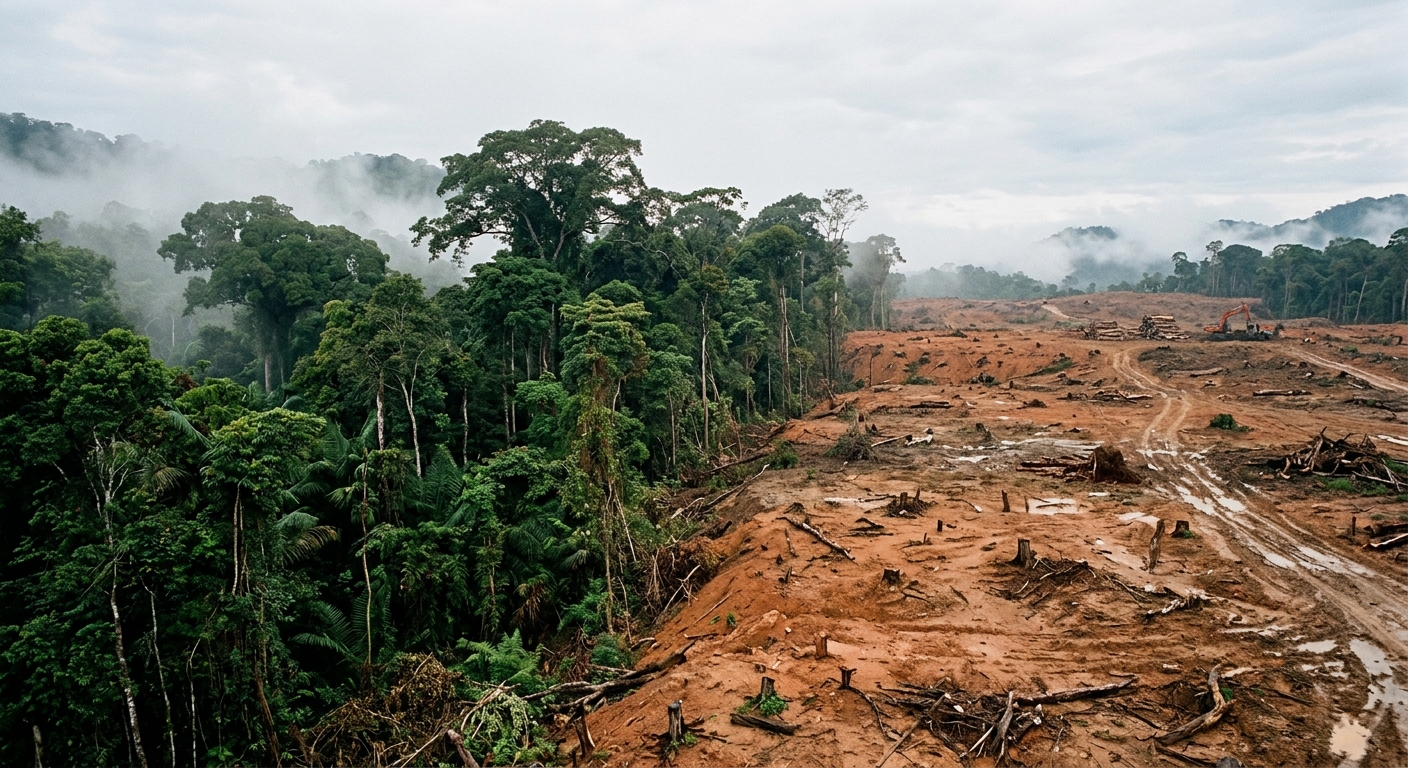
But the damage is not confined to the atmosphere; it is etched across the planet's living surface. Since the start of industrialization, humans have removed roughly one-third of the world's forests, a loss of about 2 billion hectares, according to long-run reconstructions. What matters most within that total is not just acreage, but quality. Primary and old-growth forests—ecosystems that developed over centuries, sometimes millennia—cannot be rebuilt on political timelines. A plantation of fast-growing trees may restore some canopy, but it does not quickly restore the layered habitat, deep soils, fungal networks, and evolutionary history of an intact forest.
That distinction matters because forests do far more than hold carbon. They generate rain and regulate regional water cycles; in the Amazon, for example, moisture released by trees helps drive rainfall far beyond the forest itself. They anchor soil, slow erosion, buffer floods, moderate heat, and shelter most of the world's terrestrial biodiversity. They also sustain human societies, especially Indigenous peoples whose territories often overlap with the most intact forests and whose stewardship has repeatedly proved more effective than formal protection alone, as the UN Food and Agriculture Organization (FAO) and other global assessments have shown.
Three forest systems now sit at the center of this crisis. In the Brazilian Amazon, deforestation fell sharply in 2023 after years of escalation, but the forest still lost thousands of square kilometers, according to Brazil's INPE monitoring system. In the Congo Basin—the world's second-largest rainforest—loss has continued to spread through logging roads, smallholder clearing, and industrial agriculture; Global Forest Watch data show persistent annual loss of humid primary forest across the region. In Southeast Asia, Indonesia and Malaysia have slowed some of the worst fire-driven clearing seen in the 2010s, yet old forests remain under pressure from oil palm, pulpwood, and mining, with primary forest loss still measured in the hundreds of thousands of hectares in bad years.
The drivers are not mysterious. Forests are cleared because land is valuable once the trees are gone. Agriculture remains the dominant force, especially cattle pasture and soy expansion in South America. Elsewhere, timber extraction, mining, and new roads open previously remote forests to permanent conversion. The economics are immediate. The ecological losses are deferred, dispersed, and much harder to price. That is why tree-planting announcements deserve skepticism. Governments and companies have made restoration pledges covering hundreds of millions of hectares, but implementation has lagged badly, and much of what is counted as "restoration" is commercial monoculture rather than recovered native forest. A sapling in rows is not a substitute for an old-growth rainforest. Once the original forest is gone, the living system it held rarely comes back on human terms.
Biodiversity
The felling of a forest is an act of erasure, and the damage is most irreversible in the living world it once sustained. The modern extinction rate is not merely elevated; it is radically out of scale with the natural "background" rate that prevailed for millions of years. Scientists have long treated roughly 0.1 to 1 extinction per million species per year as a baseline. Today, human pressure has pushed extinction rates to tens to hundreds of times that level, and in some analyses far higher, turning what should be a slow evolutionary process into a rapid biological contraction.
The scale of the risk is now well established. In its landmark global assessment, the Intergovernmental Science-Policy Platform on Biodiversity and Ecosystem Services (IPBES) found that around 1 million species are threatened with extinction, many within decades, unless the drivers of decline are sharply reduced. The most imperiled systems are not abstract wildernesses at the edge of the map. Tropical forests, wetlands, grasslands, coral reefs, and freshwater ecosystems—the places that feed rivers, store carbon, buffer storms, and sustain fisheries—are among the hardest hit.
This is not only an ecological loss. It is a systems failure in slow motion. Crops from almonds to apples depend on animal pollinators; the IPBES pollinators assessment estimated that this affects crops worth hundreds of billions of dollars annually. Diverse ecosystems also stabilize food supplies, filter water through wetlands and soils, and provide the raw material for medicines: the U.S. National Cancer Institute has noted that many anticancer drugs are natural products or derived from them. Remove species, and the services do not vanish neatly one by one; resilience erodes across the whole web.
The causes are cumulative and they reinforce each other. Forests are cleared for farming and infrastructure. Invasive species outcompete native ones. Pollution loads rivers, coasts, and food chains with pesticides, plastics, and excess nutrients. Climate change then multiplies the stress, shifting temperature and rainfall faster than many species can adapt or move. The statistics become real in the names we have already lost. The passenger pigeon, once so numerous that flocks darkened North American skies, was driven to extinction by hunting and habitat destruction. The golden toad disappeared from Costa Rica after climate-linked habitat shifts and disease. The vaquita, a small porpoise in the Gulf of California, has been pushed to the edge by entanglement in illegal gillnets; only a handful remain, according to the IUCN Red List. Biodiversity collapse is often described as a future threat. In truth, it is already an accomplished fact—and a warning for what comes next.
The Oceans
The consequences of our actions on land and in the air do not remain there. They flow downhill, accumulating at sea, where the oceans have absorbed much of the damage inflicted elsewhere—heat, carbon, waste, and industrial appetite. In doing so, they have begun to change at a chemical and biological level.
When seawater absorbs carbon dioxide, it forms carbonic acid, which lowers pH and reduces the carbonate ions that corals, oysters, and many plankton need to build skeletons and shells. Since the industrial era, the average pH of surface ocean waters has fallen by about 0.1 units, which corresponds to roughly a 30 percent increase in acidity, according to the National Oceanic and Atmospheric Administration (NOAA). That sounds small only if you forget that pH is logarithmic. For marine life, it is a profound shift that weakens shellfish larvae, slows reef growth, and makes it harder for already stressed ecosystems to recover.
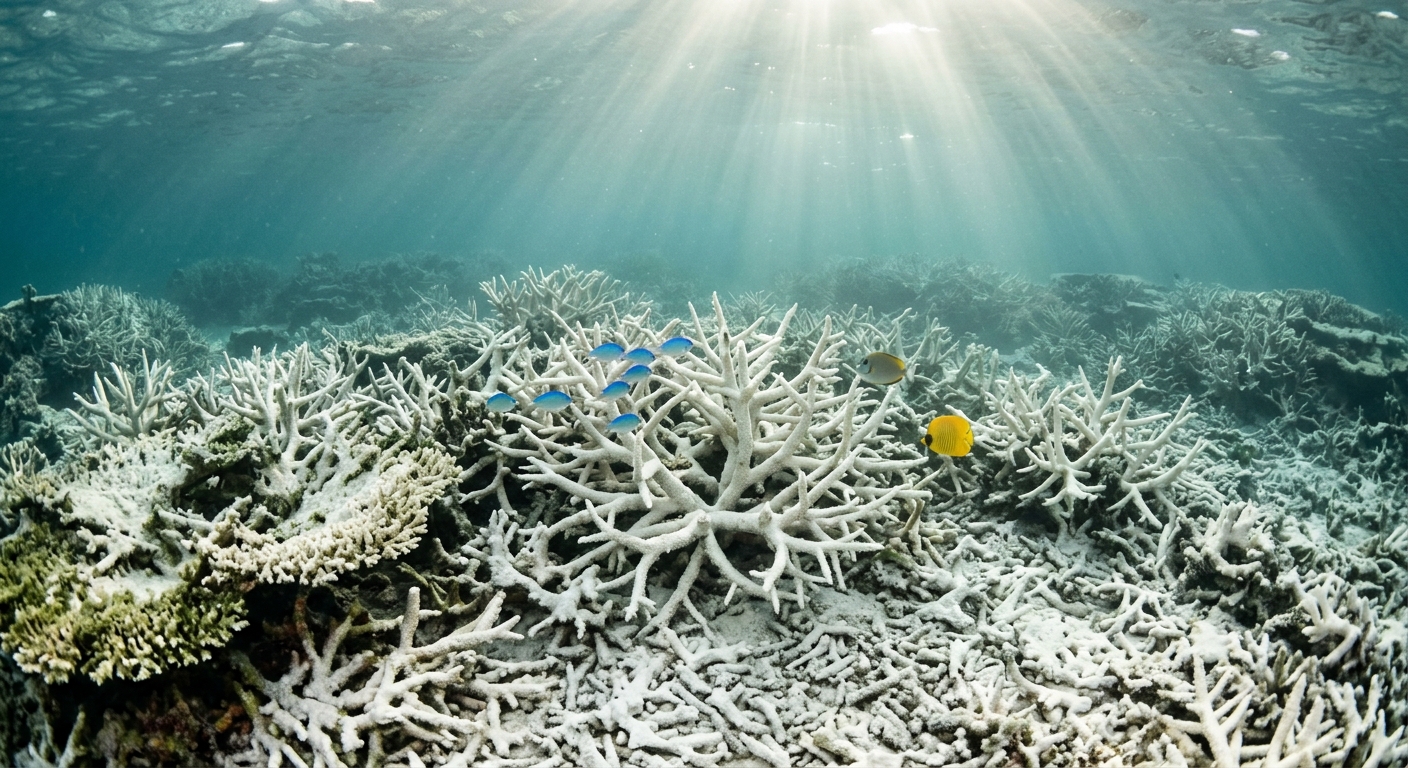
Coral reefs show the damage most visibly. The world is now in its fourth global coral bleaching event, with mass bleaching confirmed across the Atlantic, Pacific, and Indian oceans, according to NOAA and the International Coral Reef Initiative. On Australia's Great Barrier Reef, bleaching has now been recorded across large stretches of the system repeatedly. By 2024, authorities reported that very high proportions of surveyed reefs had experienced heat stress, extending a pattern that has turned what was once episodic into recurrent injury. The trajectory is no longer toward recovery between shocks, but toward repeated injury before ecosystems can rebuild.
Plastic has added a second, more visible layer of ruin. By 2015, an estimated 150 million metric tons of plastic had already accumulated in marine environments, with millions more entering each year, as summarized by the UN Environment Programme. In the North Pacific, the Great Pacific Garbage Patch covers an estimated 1.6 million square kilometers—about twice the size of Texas—according to research by The Ocean Cleanup. But the larger story is microscopic. Plastics fragment into particles that now move through plankton, fish, seabirds, and marine mammals; researchers have also detected microplastics in human blood, lungs, placentas, and breast milk. At the same time, industrial fishing has stripped abundance from the water column. The FAO reports that more than a third of assessed fish stocks are overfished. Many apex predators—tuna, sharks, billfish—have been sharply depleted, while bycatch kills untargeted species from sea turtles to dolphins. The sea is not simply dirtier than it was. It is hotter, more acidic, and in some regions less breathable for marine life. From surface reefs to the deep ocean floor, the system itself is being remade.
Soil and Water
Away from the visible drama of bleached reefs and burning forests, a quieter emergency is unfolding in the thin skin of soil and freshwater on which civilization depends. The numbers are stark. The UN Food and Agriculture Organization has estimated that roughly one-third of the world's soils are already degraded through erosion, salinization, compaction, and chemical pollution. Soil forms painfully slowly and can be lost in a few seasons. Once topsoil thins, yields fall, crops become more vulnerable to heat and drought, and farmers compensate with more irrigation and more chemical inputs—often worsening the underlying damage.
Industrial agriculture has accelerated that cycle. Vast monocultures strip fields of biological diversity above and below ground. Heavy machinery compresses soil until rain runs off instead of sinking in. Synthetic fertilizers can prop up yields in the short term, but overuse disrupts soil chemistry and leaves farmers dependent on ever-larger applications. Pesticides do not just kill target pests; they also diminish the insects, fungi, and microbial life that healthy soil requires. The result is land that may still look productive from a distance but is becoming less resilient year by year.
Freshwater tells a similar story. Nearly all of Earth's water is saline, and of the small freshwater fraction, only a tiny share—well under 1 percent of all water on Earth—is readily accessible in rivers, lakes, and shallow groundwater. Yet modern agriculture and cities have treated ancient aquifers as if they were annual income rather than inheritance. From northwestern India to the North China Plain, from California's Central Valley to parts of Iran and the Arabian Peninsula, groundwater built up over centuries has been pumped down in decades. In some places, the land itself is sinking as aquifers collapse. This is not an abstract environmental warning. Water scarcity is already sharpening conflict and displacement in places such as Syria, Iraq, and the Horn of Africa, where drought, crop failure, and state fragility feed one another. When wells run dry and soils fail, food prices jump, herders and farmers compete for shrinking resources, and families move. Soil and water are not side issues to the climate story. They are the substrate of states, markets, and daily life. When they erode, everything built on top of them becomes less stable too.
The Logic of Destruction
The persistence of this damage is not a mystery of human nature, but a feature of a system that rewards extraction and hides the cost. At the individual level, the logic is familiar. If a cheaper flight, a larger vehicle, or meat raised on cleared land carries its real environmental cost somewhere else—in a flooded delta, a smoke-choked city, a depleted aquifer—then the market price is lying. Economists call these externalized costs: harms pushed onto the public, future generations, or people in other countries. At the corporate level, the incentive is sharper still. Quarterly earnings matter now; ecological losses often arrive later, off the balance sheet. A forest cut down boosts output today. The loss of carbon storage, habitat, and water regulation barely registers in GDP, which counts what is sold but not what is stripped away.
National governments often follow the same arithmetic. GDP rises with extraction, construction, and consumption; it does not subtract a fishery collapse or the long tail of toxic exposure. For leaders under pressure to deliver jobs and growth within a single term, long-range ecological stability can look politically abstract beside immediate economic pain. Politics then hardens those incentives into structure. Industries with money at stake do not wait passively for regulation. They fund lobbying, shape public narratives, and, in many countries, help write the rules meant to constrain them. Regulatory capture is the dry term for a simple reality: agencies can come to serve the sectors they oversee more faithfully than the public they are supposed to protect.
There is also a psychological layer, though it should not be mistaken for absolution. Humans discount the future; a cost in 2050 feels less urgent than a bill due this month. We struggle with slow-moving catastrophes, especially when each individual contribution seems trivial. This is the tragedy of the commons in practice: the atmosphere, oceans, and forests are shared, but the gains from exploiting them are often private and immediate. The cruelest part is who pays. The people and countries that contributed least to environmental destruction are often hit first and hardest, with fewer resources to adapt or recover. The pattern is not simply self-destruction. It is organized inequality, enforced by markets and institutions that can, in principle, be changed. The question is not whether people are doomed to behave this way, but whether the rules will keep making destruction the rational choice.
The Search for an Exit
And yet, even as the case for repairing this planet grows more urgent, some of humanity's most ambitious spending is aimed elsewhere. In fiscal year 2024, NASA operated on roughly $24.9 billion—less than 1 percent of the U.S. federal budget, but still one of the world's largest civilian space outlays. The European Space Agency approved a €7.79 billion budget for 2024, while China's exact space spending remains less transparent, though outside estimates routinely place it in the many billions annually. Private money has scaled up alongside it: SpaceX, the dominant launch company, was valued at about $350 billion in a late-2024 tender offer, and Blue Origin continues to pour billions from Jeff Bezos's fortune into the long project of building industrial capacity off Earth.
The arguments for this are not frivolous. Space science has transformed what we know about the universe and, often, about Earth itself. Planetary defense is a real, if low-probability, civilization-scale risk. So is the "insurance policy" argument advanced by figures from Stephen Hawking to Elon Musk: a species confined to one planet is vulnerable to one catastrophe. There is also the lure of resources—water ice on the Moon, perhaps, or minerals in asteroids—and the claim that this is not an either/or choice. A technologically advanced civilization, the argument goes, should be able to decarbonize its economy and explore the solar system at the same time.
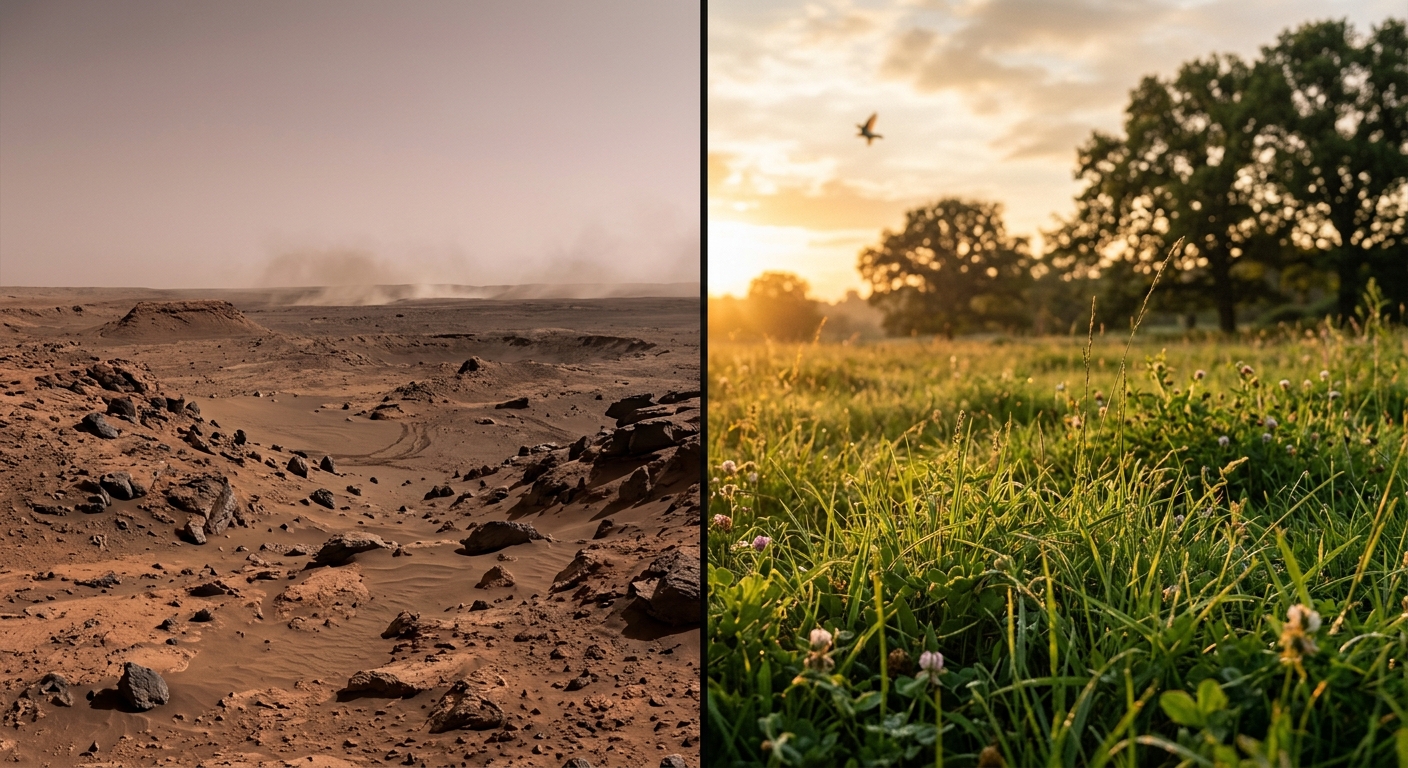
But that logic hardens into something shakier when exploration shades into escape fantasy. NASA's own Moon-to-Mars planning remains just that: planning. No space agency has a credible, funded path to a self-sustaining city on Mars, and every serious proposal runs into the same facts. Mars has a thin carbon-dioxide atmosphere, punishing radiation, toxic dust, and average temperatures around minus 63 degrees Celsius. The Moon is closer, but harsher in different ways. No known world in reach today offers anything remotely like Earth's breathable air, liquid-water oceans, magnetic shielding, or living soils. That is the contrast worth sitting with. We spend tens of billions each year learning how to leave, while the systems that make this planet habitable fight for political attention and comparatively modest protection budgets. The problem is not that space science lacks value. It is that we often fund the search for a backup world with more clarity than the work of keeping the original one alive.
The Open Ledger
Threaded together, the inventory reads like a systemic ledger of withdrawal. Atmospheric warming is pushing past 1.2°C. The oceans are absorbing nine out of every ten joules of trapped excess heat. And according to the WWF, monitored wildlife populations have collapsed by roughly two-thirds over the last half-century. This is the cumulative toll extracted from the only closed-loop life-support system we inhabit.
Why do we degrade the foundation while funding blueprints for distant worlds? The evidence points less to malice than to structural myopia. Economic models that heavily discount the future, paired with political timelines measured in years, render extraction profitable and preservation costly. We look upward because it is easier to subsidize a technological escape hatch than to rewire entrenched industrial systems.
Yet the physics are non-negotiable. Mars sits at a bone-dry minus 63°C with a toxic atmosphere barely one percent the density of Earth's, while Venus offers surface pressures that would instantly crush unshielded machinery. By every measurable standard—biodiversity, liquid water, soil fertility, atmospheric stability—this world remains incomparably more viable. Read clearly, the damage report doubles as a repair manual. We know exactly what drives emissions, which ecosystems buffer climatic extremes, and which policy mechanisms can reverse the decline. The scale of the challenge matches our capacity for coordination. We do not need an alternate world; we need the discipline to treat this one like the irreplaceable home it is. The ledger remains open. What we write next determines whether we close it in restoration or ruin.