
The Superhero Inside You: How to Stand Tall When Bullies Try to Make You Small
A story-driven adventure where kids follow a relatable school character who discovers that real strength isn't in fists
story telling, real hook, made for small kids, school · 11 min read · April 2026
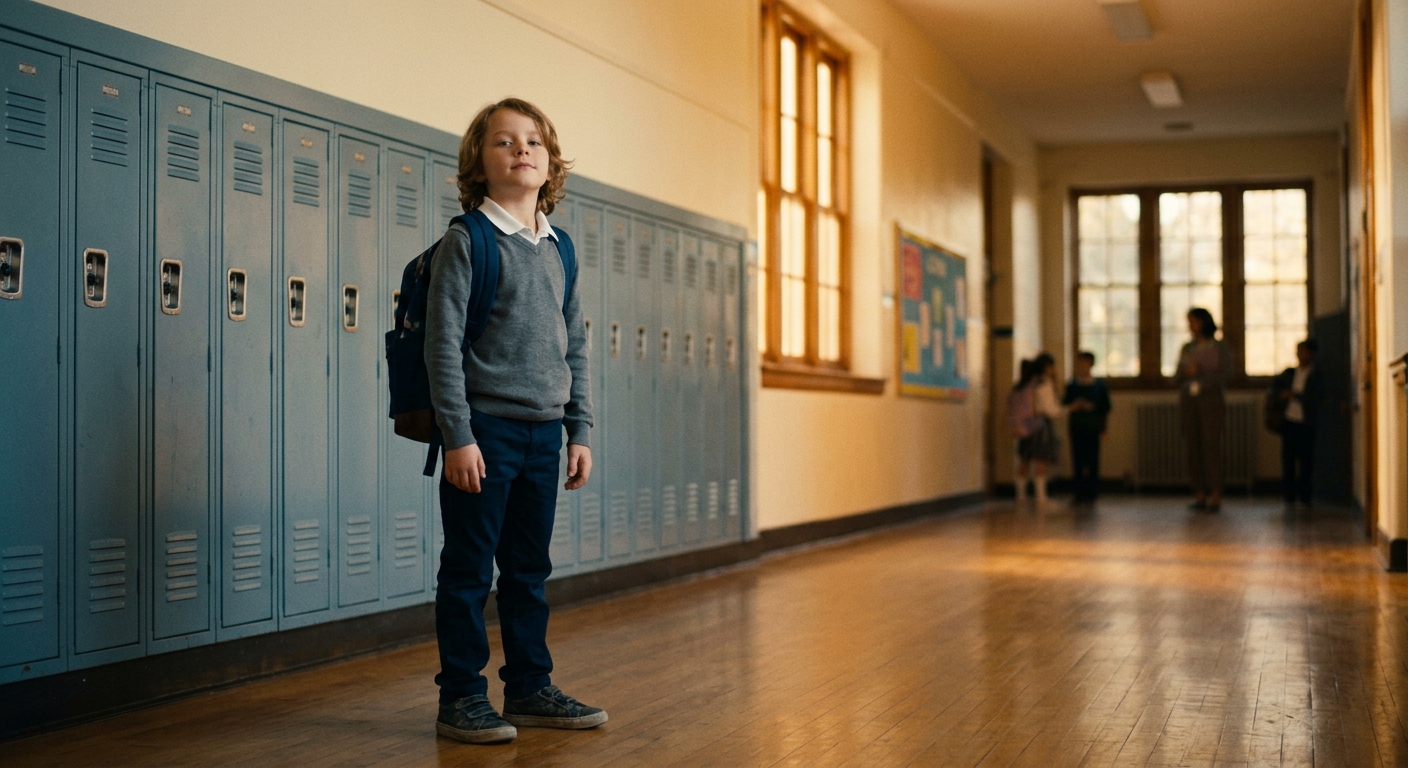
Meet Alex: The Kid Who Felt Really Small One Day
Picture this.
Alex is eight years old. It's lunchtime, and the cafeteria is loud and buzzy. Alex carries a tray to the usual spot—but before sitting down, a bigger kid slides over and says, "You can't sit here. Nobody wants you here."
Just like that.
Everyone at the table looks away. Alex's face goes hot. The tray feels suddenly super heavy. Legs want to run. Stomach feels like it dropped to the floor.
Do you know that feeling? That tight, twisty, awful feeling?
Here's something really important. What Alex felt in that moment—scared, embarrassed, angry, confused, all at the same time—those feelings are completely normal. They don't mean Alex is weak. They don't mean something is wrong with Alex. They mean Alex is human. Feelings like those are actually your brain working hard, trying to protect you.
You are allowed to feel every single one of them.
But here's the big secret, the thing that changes everything.
Being strong doesn't mean throwing punches. It doesn't mean pretending it doesn't hurt. Real strength is something even MORE powerful than that. And guess what? You already have it inside you.
This story is actually about you.
That superpower waiting to wake up? It's yours. Let's go find it together.

What Is a Bully, Really? (It's Not What Movies Show)
Okay, first level: let's figure out what we're really up against. You've seen bullies in movies. Big, loud, always wearing a mean face. But real bullying? It's a little more complicated than that.
Here's the honest truth: bullying is when someone keeps being mean on purpose—again and again—to make another person feel small, scared, or bad about themselves. That's it.
And it shows up in lots of different shapes. Sometimes it's mean words said out loud. Sometimes it's mean words sent in a text or a comment online. Sometimes it's being left out of a game or a group chat on purpose. Sometimes someone takes your things or messes with your stuff. All of these count. If it's happening to you, you get to name it.
Now, here's something important. Everyone has a bad day. Sometimes a friend snaps at you. Sometimes someone says something unkind once. That hurts, and your feelings about it are totally real and totally valid. But one bad moment isn't the same as bullying. Bullying keeps happening. It has a pattern. Knowing the difference helps you figure out exactly what you're dealing with.
And here's the part we need you to really hear—like, really hear it:
Being bullied is never, ever your fault.
Not because of how you look. Not because of what you like. Not because of anything you did. Nothing about you caused this. Nothing.
You didn't earn it. You don't deserve it. Full stop.
Now that you know what bullying actually is, let's talk about the amazing tools you have to handle it.
Your Superhero Body
The first tool you have is one you carry with you everywhere: your own body. And here's a cool secret: sometimes your body can help your feelings catch up.
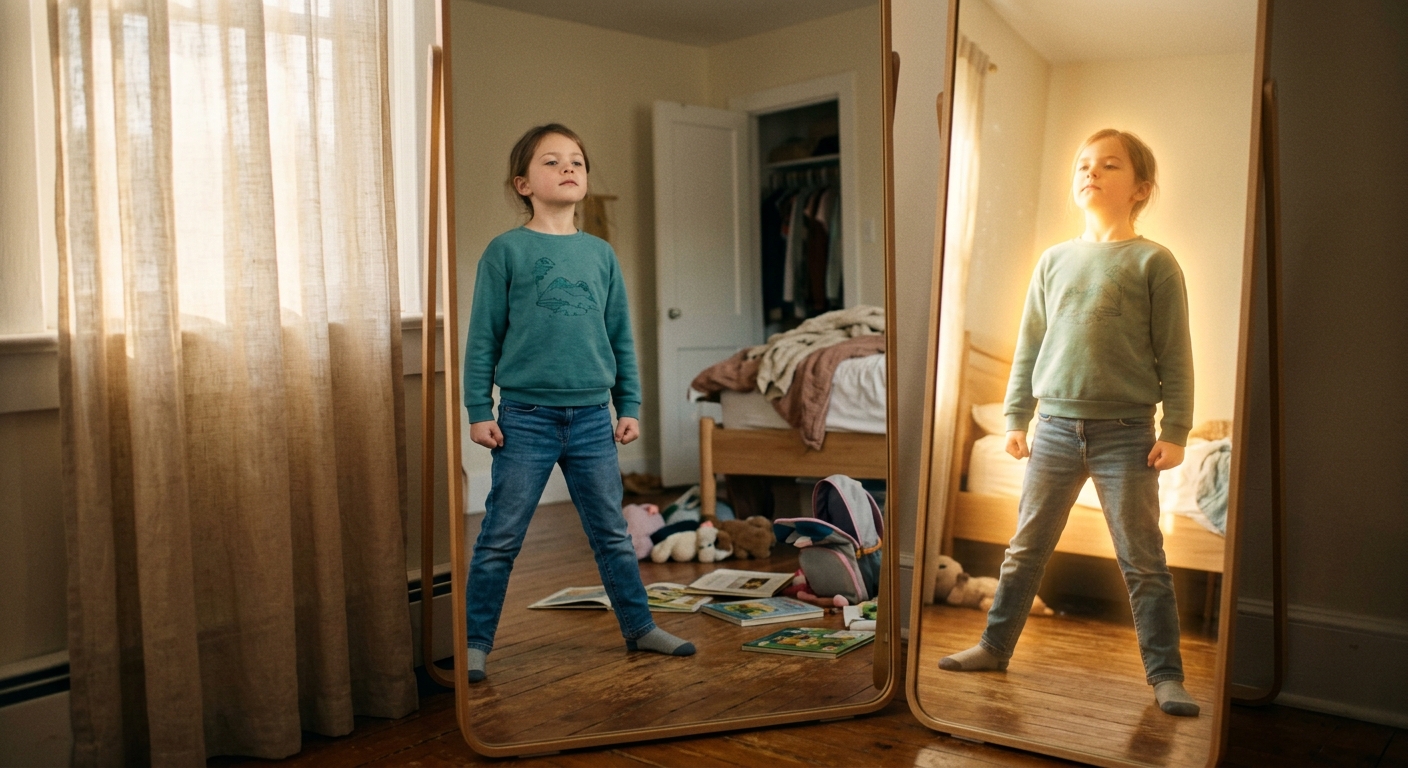
Try it with me right now. This is your "superhero posture" challenge. Stand up if you can. Put your feet on the ground like roots. Lift your head. Roll your shoulders back. Let your arms hang loose, not stiff. Take one slow breath in… and out. That's it. You're not pretending to be powerful. You're practicing what powerful feels like.
Your body sends messages, not just to other people, but to you, too. When you stand tall, it can say, "I belong here. I matter. I know my worth." And other people notice that message. Someone looking for an easy target often looks for a person who seems unsure or ready to disappear. Strong posture can change the whole picture before a single word is said.
That doesn't mean you have to puff up, glare, or get into a showdown. Nope. This is not about fighting. It's about feeling steady in your own skin. Calm. Ready. Real.
Alex tried it. At first, it felt a little awkward. Shoulders back. Chin up. Feet planted. But then something shifted. Alex didn't become a different kid. Alex became more like Alex. Bigger on the inside. Braver in the chest. Even before speaking, Alex looked less like someone shrinking away and more like someone who knew, "I deserve space, too."
And that matters. Because once your body is saying, "I'm here," your voice gets an easier job.
Use Your Voice Like a Shield
That's right. You already have one of the most powerful tools in the world. It's not a gadget you have to earn. You were born with it.
It's your voice.
Not a shouting voice. Not a tiny, scared whisper. A steady voice. Calm. Clear. Sure of itself. That kind of voice stops bullying in its tracks more often than you'd think.
Here are some phrases you can actually use—short, strong, and easy to remember when your heart is pounding:
- "Stop. I don't like that."
- "That's not okay."
- "Leave me alone."
That's it. No long speeches. No explaining yourself. Just clear words, standing tall.
Let's see what that looks like. Imagine Alex—same kid from before, stomach still a little twisty. Someone at lunch grabs Alex's drawing and laughs at it. This time, Alex looks right at them and says, steady as possible: "That's not okay. Give it back."
The other kid pauses. They expected tears, or silence, or running away. They didn't expect that.
Alex's hands are still shaking a little. The voice wobbled on the last word. And you know what? That's completely fine. Brave doesn't mean not scared. Brave means you speak anyway. The wobble is actually proof you did something hard. That's the whole definition of courage.
Now here's your mission: practice. Stand in front of a mirror. Say the phrases out loud. Ask a parent or someone you trust to play the part so you can rehearse. It might feel silly at first—but athletes practice before the big game, right? This is your training. Every time you practice, you're building a real skill.
The Power of Walking Away
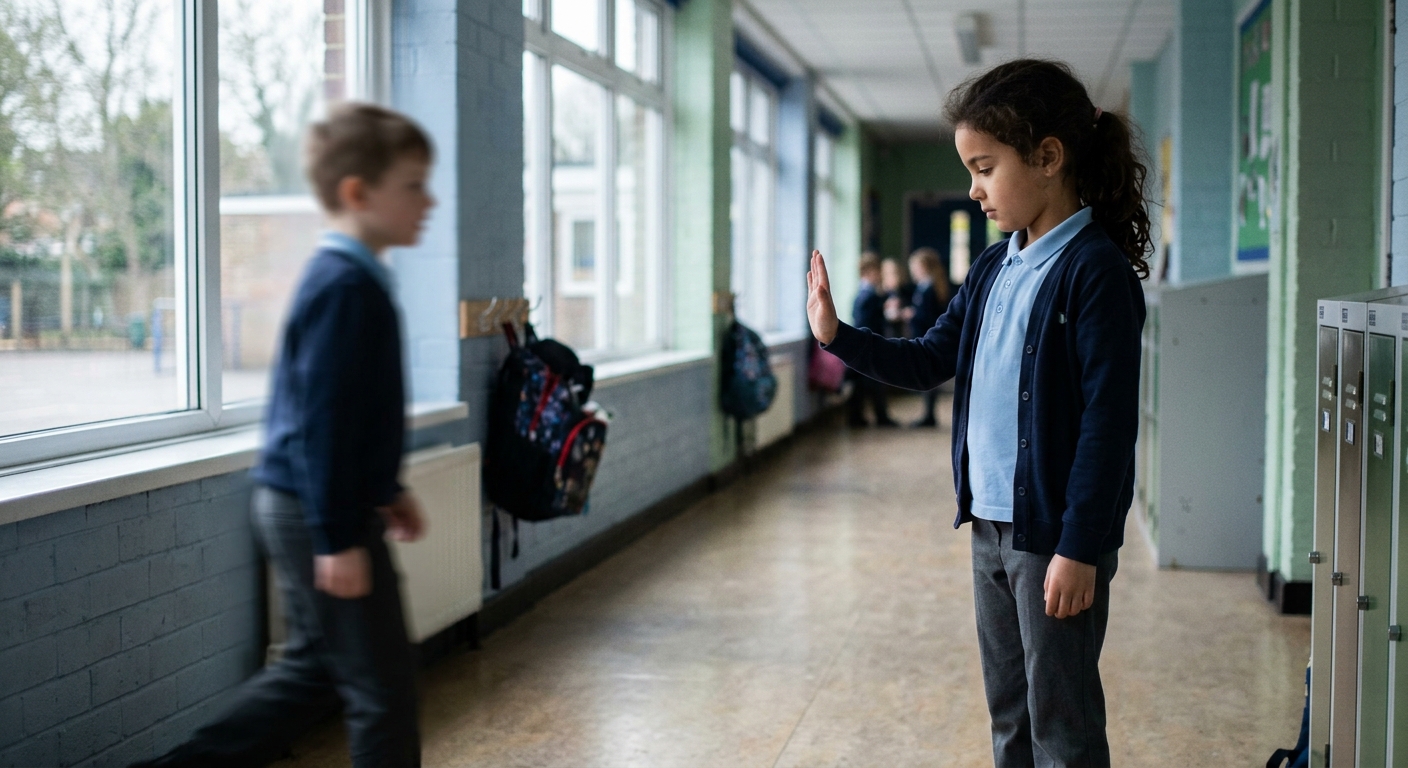
Now, let's add another powerful move to your superhero toolbelt. Sometimes the bravest move isn't what you say, but what you do with your feet: walk away.
That is not quitting. Not even close. Walking away on purpose is a strong choice. It means you are in charge of your body, your words, and your next step. Anyone can get pulled into a fight. It takes real strength to say, "Nope. I'm not giving you my energy."
A bully is often hoping for a big reaction. Yelling. Crying. Arguing. When you turn and leave calmly, you do something powerful: you don't hand them the reaction they wanted. You keep your power with you.
Let's make it easier for your brain in that hard moment. Try this tiny trick: Stop. Breathe in. Count 1… 2… 3. While you count, picture your safe place. Maybe it's your room, your grandma's couch, or a sunny bench at school. Then move your feet.
That is what Alex does. Someone says something mean. Alex feels that hot, twisty feeling inside. Ugh. That feeling is real. Alex takes one breath, counts to three, and walks away. Not to nowhere. Toward something better. Toward a friend, a teacher, or a trusted adult who can help.
And yes, it can feel awful at first. Your chest might feel tight. Your eyes might sting. That doesn't mean you were weak. It means you were brave. Brave can feel uncomfortable before it feels strong.
Telling Isn't Tattling
And you never, ever have to hold that uncomfortable feeling all by yourself. That brings us to one of the most important power-ups of all: calling for backup.
Carrying a big, heavy feeling around is exhausting, isn't it? Sometimes, a little voice in your head says, "Don't tell anyone," or "That makes you a tattletale." Let's bust that myth right now. Telling an adult about a bully isn't tattling. It's calling for your team. Even the strongest superheroes need help when things get too big to handle alone. Asking for help is the smartest, bravest move you can make.
So, who is on your team? Take a second and think. It could be a parent, a favorite teacher, your school counselor, a coach, or a grandparent. These are your trusted adults, your personal support crew. Your first mission is just to pick one.
When you're ready to talk, you don't need a big, fancy speech. Just give them the simple facts:
- Who is bothering you?
- What are they doing or saying?
- Where and when is it happening?
When Alex finally told a teacher what was happening, it felt like a giant backpack full of rocks just slid off Alex's shoulders. The problem wasn't gone, but Alex wasn't alone anymore. Sharing the problem is the first step to shrinking it.
Now, sometimes grown-ups don't fix things right away. That can feel really discouraging. But don't give up! If the first person you tell doesn't help, go to the next person on your team. Keep telling until someone listens. You are worth fighting for.

You Are Already Enough
And while your team has your back, you can build up your own power on the inside. This is about building the confidence that no one can touch.
Here's a secret that sounds simple but is actually powerful: real confidence doesn't come from what other people say about you. It comes from knowing who you are—and that's something nobody can take away.
Think about YOU for a second. What are you good at? Maybe you're a fast runner. Maybe you make your little sibling laugh. Maybe you're the friend who always notices when someone looks sad. Those things are real. They belong to you.
Try this right now. Think of three things:
- Something you're good at
- Something kind you've done recently
- One person who loves you
Got them? Good. That's your foundation. That's the ground you stand on.
Now for your next level: create your own superhero motto. One sentence you say to yourself every single morning. Something like "I am brave, I am kind, I am enough." Or make up something totally yours. Say it out loud. Say it like you mean it—because you do.
Here's something else worth knowing. Bullies often say mean things because they feel bad inside. Maybe they're hurting. Maybe someone is mean to them. That doesn't make what they do okay—not even a little. But it means their words are about their pain, not your worth.
Their words are not the truth about you.
When Alex started thinking about these things, something clicked—like armor settling into place, piece by piece. Strong. Real. Theirs.
Yours is waiting too.
Be a Hero for Others
Now for the next level, and it matters a lot: sometimes you are not the one being bullied. Sometimes you're the one who sees it.
That can bring up big feelings too. You might feel nervous. Frozen. Unsure. That is normal. Truly. But staying silent can make a bully think, "Nobody will stop me." Even a small, quiet action can change the whole scene.
You do not have to be a lone superhero.
You can scoot over and sit with the kid who's alone. You can say, "Hey, that's not cool." You can walk with a friend to find a teacher or another safe adult.
That is helping. That is brave.
And kindness? It is not a tiny thing. It is strength. Real strength. One friendly act can turn a scary day into a better one. A smile. A seat at your table. A "Want to come with us?" Those are powerful moves.
Picture Alex at recess now. Alex sees a new kid getting laughed at near the swings. That stomach does a little flip. Alex remembers being scared, but takes a breath, walks over, and says, "You can play with us." Then Alex looks at the teasing kids and says, "Stop. That's not okay," before walking with the new friend to tell the teacher.
See that? Alex didn't fight. Alex used all the tools: a kind action, a strong voice, and getting help.
And guess what? You can too.
Your Cape Was Always There
Look at how far you've come.
You know how to stand tall—shoulders back, chin up, taking up the space you deserve. You know how to use your voice: calm, clear, and strong. You know that walking away isn't giving up—it's choosing you. You know to tell a trusted adult, because asking for help is one of the bravest things a person can do. And you know something really important: your worth doesn't come from what anyone else says about you.
That's a lot. Seriously. You've been leveling up this whole time.
Here's what we want you to hear right now, just you and us: You are not alone. Every kid who has ever felt nervous in the hallway, or felt their stomach drop when they saw that person coming—they've felt exactly what you feel. Those feelings are real, and they make total sense.
But here's the truth: you are braver than you feel right now.
Your cape was never missing. It was just waiting for you to notice it.
Your one action for today: Stand in front of a mirror, take a deep breath, and say out loud—"I am brave. I belong here." That's it. Small, but real.
Think of Alex—not perfect, maybe a little nervous, but standing tall anyway. That's you. Right now. Already winning.