
The Case That Broke the FBI: Why D. B. Cooper Was Never Caught
A straight investigative retrospective tracing the arc of the FBI's 45-year investigation — what they found, what dead
informative · 9 min read · April 2026
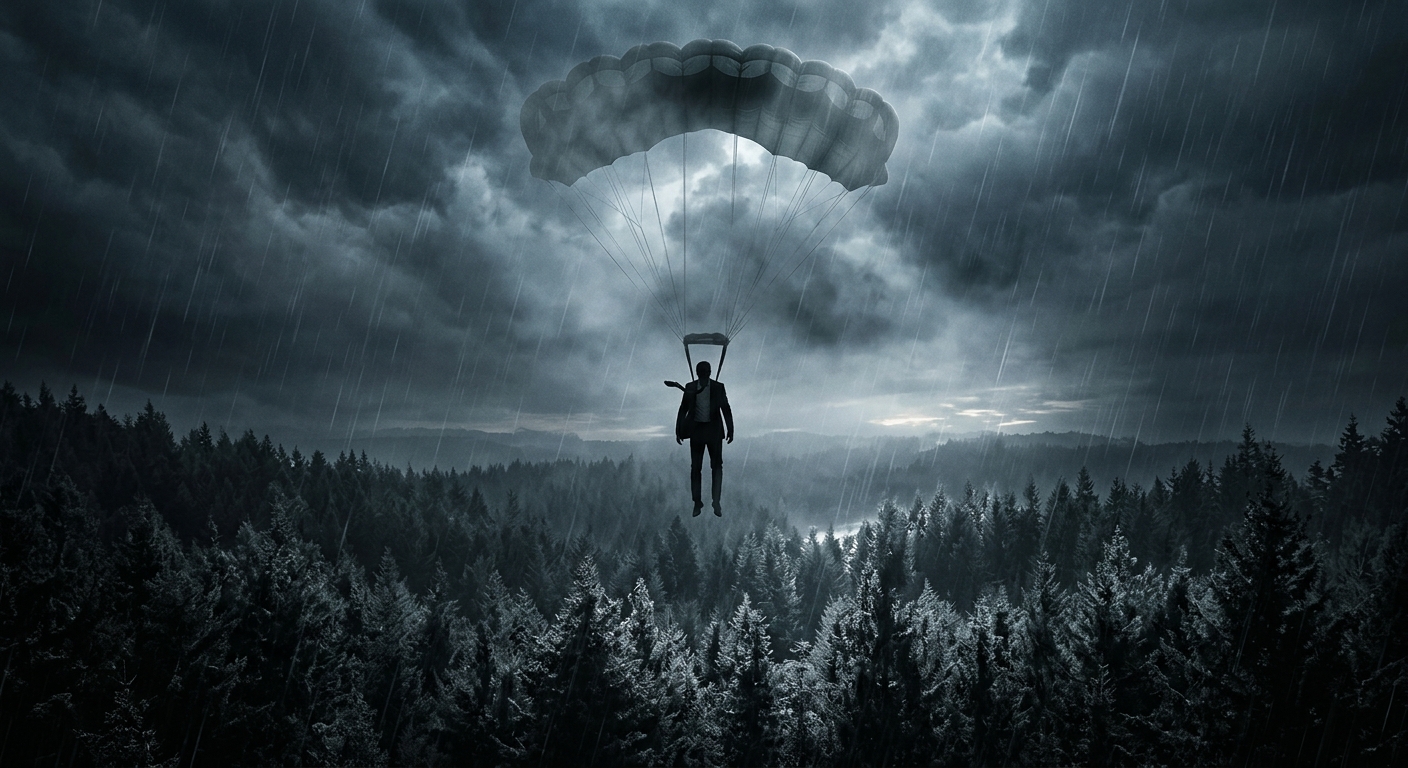
It began, in the record, with a short flight and a plain demand. On the afternoon of November 24, 1971, a man using the name Dan Cooper boarded Northwest Orient Flight 305 from Portland to Seattle, handed a flight attendant a note saying he had a bomb, and asked for $200,000 and four parachutes. After the plane landed in Seattle and the ransom was delivered, he ordered the aircraft back into the air, heading south. Somewhere over the dark, rainy Pacific Northwest, he lowered the rear stairs and jumped.
Those facts are the fixed points. Everything else widened into one of the FBI's longest embarrassments: a case that consumed agents, tips, and laboratory work for decades without producing a body, a confession, or a prosecutable answer. The mystery has endured not simply because a hijacker vanished, but because the bureau never solved him. That failure carries unusual weight. By the FBI's own accounting, the Cooper case became the only unsolved commercial airline hijacking in American history—a distinction that turns a lurid anecdote into an institutional story.
What follows, then, is not a tidy whodunit. It is a tour through the machinery of an investigation: the evidence that seemed promising, the suspects who briefly looked plausible, the dead ends that multiplied, and the moment the bureau, after 45 years, effectively set the file aside.
The Crime
The undisputed part of the story began when a man calling himself Dan Cooper bought a one-way ticket on Northwest Orient Flight 305. Early reporting garbled the name into "D. B. Cooper," and the mistake stuck. Once airborne, he passed a note to a flight attendant, calmly informing her he had a bomb. Witnesses described him as a white man in his mid-40s, wearing a dark business suit, white shirt, narrow black tie, and sunglasses—polite, almost corporate in his manner. The description was vivid enough to remember and broad enough to fit a great many men in 1971.
His demands were specific: $200,000 in unmarked $20 bills and four parachutes. In Seattle, the airline complied. The passengers were released, but Cooper kept several crew members aboard and ordered the Boeing 727 back into the air, this time heading south at low altitude. He instructed the pilots to deploy the rear airstair—a built-in stairway at the back of the aircraft—and somewhere over southwestern Washington, he jumped.
The exact drop zone has never been fixed, but investigators placed it broadly in a corridor of rough country between Seattle and Portland: forest, rivers, ravines, and logging roads. The weather was miserable—cold, rainy, and dark. He jumped at night with what was likely a non-steerable emergency parachute into terrain that would have been punishing even for an expert. For this reason, many investigators considered his survival unlikely. But unlikely is not impossible, and the case never produced the one thing that would settle it: a body, a parachute, or a confirmed death scene.
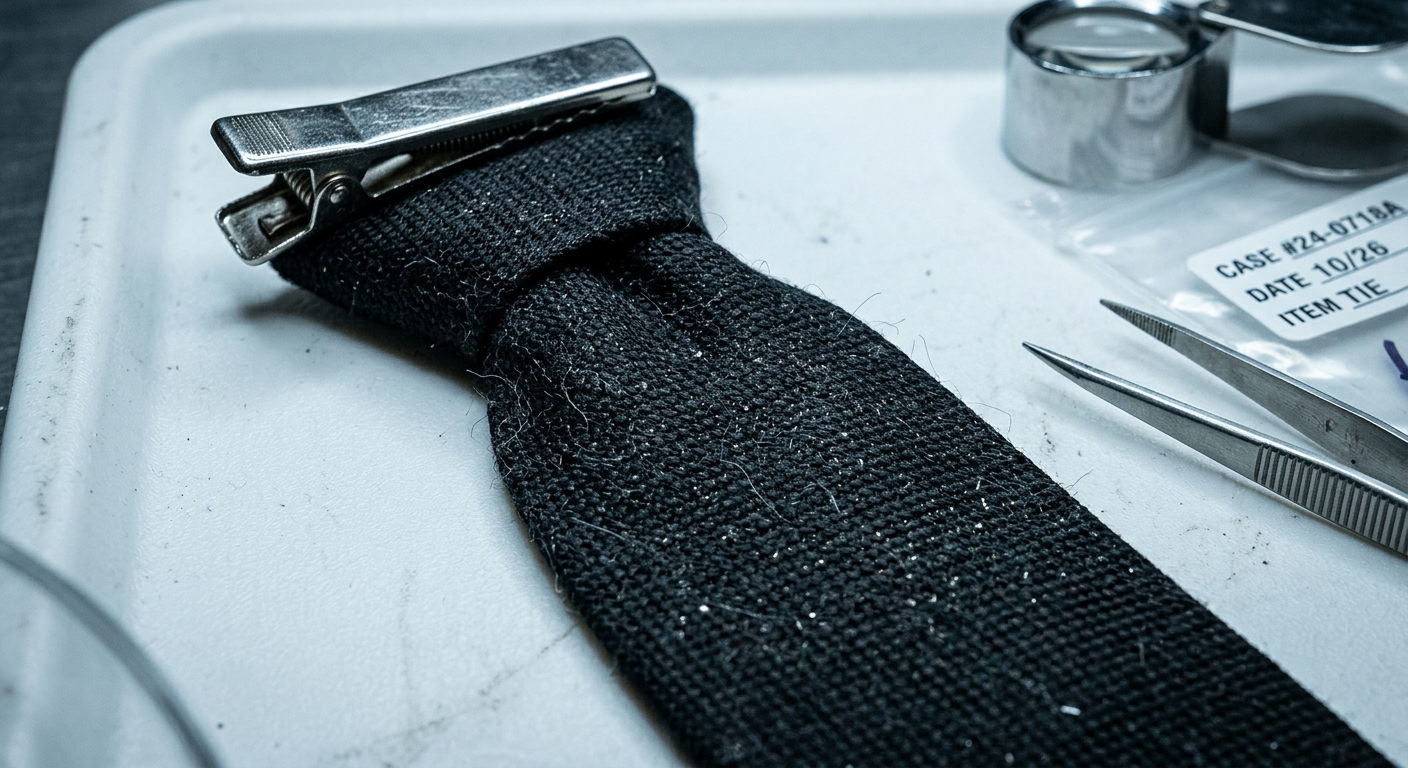
From the first hours, the FBI's file was both substantial and frustratingly thin. Agents had witness statements, a partial set of fingerprints, the black clip-on tie Cooper left behind, and the serial numbers of the ransom money. It was enough to build one of the most famous investigations in American history. It was not, however, enough to say who he was.

The Early Investigation
What came next was less a clean pursuit than a demonstration of how quickly a man could disappear into the Pacific Northwest. In the hours after the jump, law enforcement threw scale at the problem: ground teams, aircraft, and an FBI investigation that widened fast because it had so little to work with. The search area sprawled across dense timber and steep slopes, all of it hampered by bad weather. Even in the best conditions, it was the kind of terrain that swallows objects, let alone a person descending by parachute at night. The initial response was energetic and, in practical terms, almost blind.
This is why the ransom money became the investigation's most durable instrument. Agents had the serial numbers and circulated them to banks, casinos, and racetracks, hoping an ordinary cash transaction might do what the field searches could not. For years, the logic of the case rested on that paper trail: if one of the $20 bills surfaced, it might identify Cooper, his route, or whoever handled the money after him. The bills were not just evidence; they were, in effect, the investigation's bait.
Then, in 1980, came the one development that seemed poised to break the stalemate. An eight-year-old boy, Brian Ingram, digging on the Columbia River bank at a spot known as Tena Bar, found a small, decaying bundle of $20 bills. The serial numbers matched the ransom money. The discovery confirmed at least one hard fact: some of Cooper's cash had made it into the landscape and stayed there long enough to rot.
But the find did not clarify the case so much as deform it. Tena Bar was not where investigators had projected the jump zone. The money's presence there suggested that the FBI's coordinates might have been wrong, or that the bills had traveled—by water, by burial and erosion, or by some human hand no one could identify. The first real physical break in the case did not narrow the mystery. It widened it, and the investigation would spend years living inside that contradiction.

Forensic Limits
The money's discovery highlighted the institutional disadvantage that shaped everything that followed. The Bureau was trying to solve a 1971 crime with tools that, in several crucial respects, did not yet exist. There was no DNA database to query, no airport CCTV archive to revisit, and no routine digital trail of ticketing or travel records. What investigators had instead was a thin collection of physical artifacts and witness memories, all degrading over time.
The most important artifact was the clip-on tie Cooper left on the plane. Over the decades, it became less an article of clothing than a forensic time capsule, repeatedly reexamined as laboratory methods improved. Researchers tested it for fibers, DNA, and microscopic particles. The most suggestive findings were tiny metal residues—among them rare particles associated with specialty manufacturing—that encouraged the theory that Cooper may have worked in an industrial setting, possibly aerospace. But this was an inference, not an identification, drawn from a tie that had been worn, handled, and stored for many years.
The fingerprint problem was similarly profound. Investigators recovered partial prints, but in the era before the Automated Fingerprint Identification System (AFIS), a print was useful mainly if agents already had a suspect in mind. One could compare a known set to the evidence, but one could not cast the print into a vast digital net and wait for a name to come back. In a case with hundreds of tips and no confirmed identity, that limitation mattered enormously.
The Cooper investigation thus became a kind of forensic relay race across generations: each new technique arrived late, applied to evidence collected under older standards. DNA could be attempted only on material never meant for genetic testing. Trace analysis could grow more sophisticated only after the trace itself had aged or been contaminated. Cold cases from this period do not resist solution because investigators lacked imagination. They resist because the evidence was born analog, and the science that might have saved it came later.
The Parade of Suspects
This institutional problem produced the case's longest-running spectacle: the parade of suspects. Over the decades, the FBI formally investigated more than 1,000 people. That number is useful not because it suggests progress, but because it captures the opposite. Cooper generated suspects the way some cases generate paperwork.
They arrived through familiar channels. A relative would call after a deathbed confession. An old friend would decide, years later, that a certain story or scar now seemed meaningful. Members of the public sent in tips by the thousands, often built on little more than a passing resemblance or a hunch. In a case with so few fixed points, almost any man of the right age could be made to sound plausible for a page or two.
The problem was partly one of description. The witness accounts pointed to a white man in his 40s, businesslike and self-possessed—unremarkable in the way many American men of 1971 were unremarkable. A suspect could seem to fit because he looked like the sketch; he could be ruled out only after investigators did the slower work of checking alibis, military records, and family histories, exposing the mismatch between a compelling anecdote and provable fact.
The case also became catnip for amateurs. Civilian researchers and armchair detectives kept files, built timelines, and in some instances surfaced genuinely useful leads. But the same obsession that preserved the mystery also distorted it. Popular fascination creates its own evidence economy, where every coincidence feels charged and every family legend acquires forensic weight. In that sense, the Cooper investigation was never just a manhunt. It was a long lesson in how difficult it is to identify someone when the story is better known than the facts.
The Case Goes Cold
By 2016, the chase had acquired a bureaucratic fatigue of its own. In July of that year, the FBI announced it was suspending active investigation of the D. B. Cooper case. The decision was not because the mystery was solved, but because the bureau had concluded it no longer justified the manpower. In practical terms, "suspension" meant something plainer than the romance of an "open file": no agents assigned, no active pursuit of tips, no routine expenditure of investigative resources. The case was not so much closed as set on a shelf.
The bureau's explanation was candid. In a public statement, it noted that its resources were better spent on matters involving an immediate threat to life and cases with a more realistic chance of resolution. It was an institutional judgment about diminishing returns. After decades of suspect theories, forensic reexaminations, and public fascination, the evidence had not ripened into an answer. It had thinned.
Even then, the FBI left a narrow door open. If someone produced specific, credible physical evidence—something tangible and genuinely new—the bureau said it would consider it. What it would no longer do was pursue leads generated by the endless afterlife of the case. This was not a declaration that Cooper escaped into legend or died in the woods. It was something more sober: the federal government acknowledging that some mysteries are not solved so much as exhausted.

The Unknowing
In the end, the case stayed open for 45 years not because the evidence steadily tightened, but because it occupied a peculiar place in the FBI's imagination: the bureau's only unsolved hijacking, a public embarrassment turned durable obsession. Institutional pride mattered. So did symbolism. A file like that becomes more than a file; it becomes a standing challenge.
But the long life of the investigation also reveals the limits of forensic science, especially when it arrives late. New tools can re-examine old evidence, but they cannot conjure evidence that was never found or was contaminated by time. The Cooper case has often been described as a puzzle awaiting the right breakthrough. It may be closer to a puzzle missing half its pieces.
Then there is the cultural problem. D. B. Cooper did not remain merely a fugitive; he became a folk character, a cool-headed outlaw drifting through the American imagination. That mythology helped generate tips and public attention, but it also flooded the zone with noise: false confessions, suspect theories shaped more by fantasy than fact, and a narrative so polished by retelling that it overwhelmed the record itself.
The case is not resolved in any meaningful sense. There is no confirmed identity, no confirmed fate, and no forensic closure. The FBI's suspension of the active investigation was not a solution, but something rarer in famous cases: an institution admitting that a mystery, after enough years, can simply remain a mystery. We are left with the only conclusion the record truly sustains: the not-knowing is the story.